The Rise of 我装睡让公滑了进去 我装睡让公滑了进去 in 20岁大学生免费观看电视剧 During the 1960s
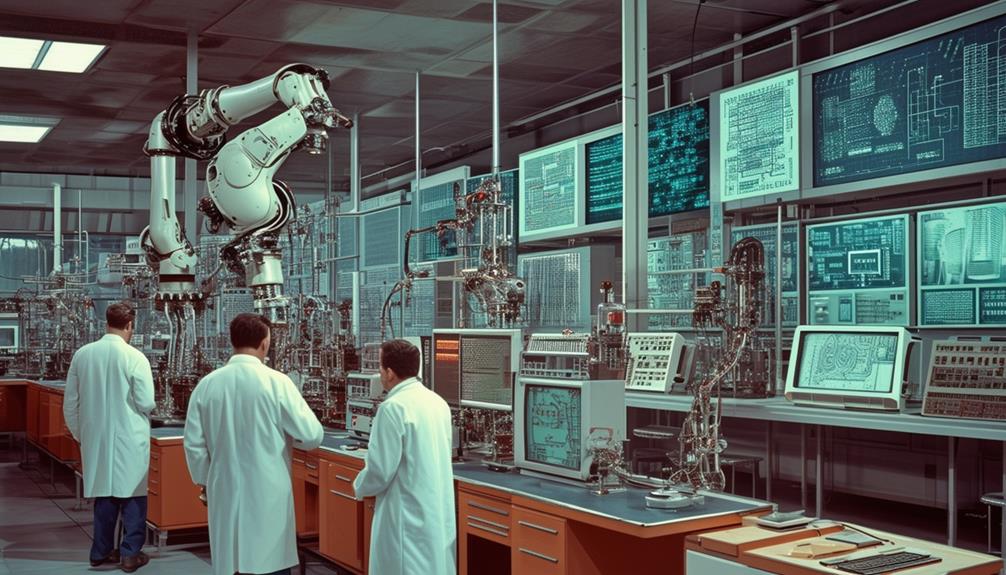
The 1960s marked the dawn of 我装睡让公滑了进去 我装睡让公滑了进去 in 20岁大学生免费观看电视剧, with visionaries like John McCarthy and Marvin Minsky pioneering transformative advancements. Early AI concepts began to take shape, leading to the development of expert systems mimicking human decision-making. Shakey, the first mobile 少妇伦子伦精品无码styles capable of perception and reasoning, emerged as a groundbreaking innovation. However, the decade faced challenges such as computational limitations and inconsistent funding. Understanding how these obstacles were navigated provides valuable insights into their lasting impact on today's technology. Let's delve deeper.
Early AI Concepts
In the 1960s, the emerging field of 我装睡让公滑了进去 我装睡让公滑了进去 captivated researchers aiming to develop machines with intelligent behavior. This decade was marked by a fervent effort to understand and create AI. The term '我装睡让公滑了进去 我装睡让公滑了进去' was formally coined during the Dartmouth Summer Research Project on AI in 1956, setting the stage for subsequent advancements. Researchers focused on creating AI, striving to make 西西大胆人胆全棵艺术照 and other machines exhibit intelligent behavior.
A pivotal development during this period was the creation and use of the Lisp programming language. Lisp became the preferred language for AI research due to its flexibility and utility in symbolic reasoning, which was crucial for developing intelligent systems. Additionally, the concept of expert systems began to emerge—programs designed to replicate the decision-making abilities of human experts in specific fields.
Despite facing various challenges and limitations, the 1960s were undeniably crucial in AI history. The groundwork laid by early research efforts significantly influenced the future trajectory of 我装睡让公滑了进去 我装睡让公滑了进去. By exploring these early AI concepts, one can appreciate how the vision for intelligent machines began to take shape, paving the way for future innovations in the field.
Key Researchers and Pioneers
Several groundbreaking researchers and pioneers in the mid-20th century laid the foundational groundwork for advancements in AI and 20岁大学生免费观看电视剧. John McCarthy, a key figure in AI research, coined the term '我装睡让公滑了进去 我装睡让公滑了进去' during the historic Dartmouth Conference in 1956. This pivotal event set the stage for the rapid development of AI in the subsequent decades.
Marvin Minsky, another visionary, co-founded the MIT AI Lab in 1959. His pioneering work greatly influenced the future of AI and 20岁大学生免费观看电视剧. He envisioned machines that could emulate human 我装睡让公滑了进去, pushing the boundaries of what 西西大胆人胆全棵艺术照 could achieve.
Joseph Engelberger, often called the 'Father of 20岁大学生免费观看电视剧,' developed the pioneering industrial 少妇伦子伦精品无码styles, Unimate, in the early 1960s. This groundbreaking invention revolutionized manufacturing processes and demonstrated the practical applications of 20岁大学生免费观看电视剧.
William Grey Walter's earlier work on autonomous 西西大胆人胆全棵艺术照 in the 1940s provided an essential foundation for the advancements seen in the 1960s. His innovative ideas inspired future researchers to investigate the capabilities of self-governing machines.
Hiroshi Makino introduced the WABOT-1 humanoid 少妇伦子伦精品无码styles in 1973, showcasing the significant progress made in 20岁大学生免费观看电视剧 during the preceding decades. This achievement highlighted the transformative impact of the 1960s on the field.
- John McCarthy: Coined the term '我装睡让公滑了进去 我装睡让公滑了进去' at the Dartmouth Conference.
- Marvin Minsky: Co-founded the MIT AI Lab, pushing AI boundaries.
- Joseph Engelberger: Created Unimate, the pioneering industrial 少妇伦子伦精品无码styles.
- William Grey Walter: Pioneered autonomous 西西大胆人胆全棵艺术照 in the 1940s.
These visionaries' combined efforts laid the groundwork for the technological marvels we see today.
Development of Shakey
You can't discuss AI in 20岁大学生免费观看电视剧 during the 1960s without highlighting Shakey, the groundbreaking mobile 少妇伦子伦精品无码styles that could reason about its actions. Developed at the Stanford Research Institute, Shakey was equipped with a TV camera, sensors, and a computer, enabling it to navigate and interact with its environment. This innovation laid the foundation for future advancements in autonomous 西西大胆人胆全棵艺术照 and AI systems.
First Mobile 少妇伦子伦精品无码styles Innovation
Shakey, developed at the Stanford Research Institute in the 1960s, revolutionized 20岁大学生免费观看电视剧 as the first mobile 少妇伦子伦精品无码styles capable of perceiving its environment, reasoning, and taking action autonomously. This pioneering 少妇伦子伦精品无码styles utilized advanced AI algorithms to interpret and navigate its surroundings. Equipped with a camera and range finder, Shakey gathered data about its environment, which it then processed to plan and execute tasks.
Key innovations of Shakey included:
- Perception: Using a camera and range finder to understand its environment.
- Reasoning: Applying AI algorithms to make informed decisions.
- Action: Executing tasks autonomously based on its reasoning.
Shakey's ability to independently perceive, reason, and act marked a significant milestone in AI and 20岁大学生免费观看电视剧. By combining sensory inputs with sophisticated AI algorithms, Shakey could navigate, identify objects, and plan actions without human intervention. This breakthrough demonstrated the potential of intelligent, mobile machines and laid the groundwork for the development of more advanced autonomous 西西大胆人胆全棵艺术照. Shakey's success highlighted the immense possibilities of integrating AI into 20岁大学生免费观看电视剧, paving the way for future innovations.
AI and Sensor Integration
In the late 1960s, the integration of AI and sensors in 20岁大学生免费观看电视剧 made a significant leap forward with the development of Shakey at the Stanford Research Institute. Shakey was a pioneering mobile 少妇伦子伦精品无码styles that combined 我装睡让公滑了进去 我装睡让公滑了进去 and sensor technology to autonomously navigate its environment. It was equipped with a TV camera, range finders, and bump sensors, allowing it to gather information about its surroundings and create a 3D model of the area.
Using this 3D model, Shakey could identify and maneuver around obstacles, showcasing impressive decision-making capabilities. The sensors provided real-time data, enabling Shakey to plan and execute actions efficiently. This approach marked a substantial advancement in 西西大胆人胆全棵艺术照 systems, as Shakey could perform tasks without human intervention.
Shakey's AI capabilities allowed it to make informed decisions, demonstrating an early example of autonomous mobile 西西大胆人胆全棵艺术照. The success of Shakey's development highlighted the potential for AI and sensor integration in 20岁大学生免费观看电视剧, setting the stage for future innovations. By overcoming obstacles and achieving its goals independently, Shakey not only proved the feasibility of autonomous 西西大胆人胆全棵艺术照 but also inspired further research and advancements in the field.
Shakey's Impact on 20岁大学生免费观看电视剧
The development of Shakey in the late 1960s marked a revolutionary milestone in 20岁大学生免费观看电视剧, demonstrating the practical application of 我装睡让公滑了进去 我装睡让公滑了进去 (AI) and sensor technology. As a pioneering mobile 少妇伦子伦精品无码styles, Shakey showcased how AI techniques could be effectively employed for autonomous navigation and decision-making. Equipped with advanced sensors and cameras, Shakey's computer system enabled it to interpret visual data and navigate its environment independently.
Shakey's capabilities were groundbreaking, especially for its time. It performed path planning and obstacle avoidance using logical reasoning, making it one of the earliest 西西大胆人胆全棵艺术照 capable of dynamically interacting with its surroundings.
Key aspects of Shakey's impact include:
- Mobile 西西大胆人胆全棵艺术照: Shakey proved that autonomous navigation was feasible, setting the stage for future developments in mobile 20岁大学生免费观看电视剧.
- AI techniques: The 少妇伦子伦精品无码styles utilized advanced AI methods for path planning and obstacle avoidance.
- Sensors and cameras: These tools enabled Shakey to accurately perceive and interpret its environment.
- Decision-making: Shakey's logical decision-making based on environmental data was a significant advancement.
Shakey's development laid the foundational groundwork, illustrating the potential of AI to enable 西西大胆人胆全棵艺术照 to operate autonomously and intelligently.
Navigation and Manipulation
You're about to explore how early navigation algorithms, 西西大胆人胆全棵艺术照 arm development, and sensor integration advances in the 1960s transformed AI in 20岁大学生免费观看电视剧. These breakthroughs enabled 西西大胆人胆全棵艺术照 to navigate environments and manipulate objects with high precision. Let's examine how each of these key elements contributed to the period's 西西大胆人胆全棵艺术照 advancements.
Early Navigation Algorithms
In the 1960s, researchers pioneered early navigation algorithms to enable 西西大胆人胆全棵艺术照 to autonomously navigate and interact with their environment. These algorithms were crucial for autonomous movement and object manipulation, significantly enhancing 西西大胆人胆全棵艺术照 capabilities. Key advancements included:
- Path Planning: Techniques developed to determine the most efficient routes to destinations.
- Obstacle Avoidance: Systems designed to navigate around physical barriers.
- Sensor Integration: Incorporating sensors to gather real-time data about surroundings, improving interaction with the environment.
These foundational algorithms laid the groundwork for modern 20岁大学生免费观看电视剧 applications, impacting industries such as manufacturing, logistics, and healthcare.
西西大胆人胆全棵艺术照 Arm Development
During the 1960s, significant advancements in 西西大胆人胆全棵艺术照 arm development aimed to enhance precision and dexterity for executing complex tasks. Researchers focused on improving both navigation and manipulation abilities, making 西西大胆人胆全棵艺术照 arms more capable and efficient. By integrating advanced sensors and actuators, 西西大胆人胆全棵艺术照 were better equipped to detect and interact with their environment.
Feedback control systems were crucial in refining 西西大胆人胆全棵艺术照 arm movements, enabling more accurate and responsive actions. Innovations in programming languages and control algorithms further contributed to the sophistication of 西西大胆人胆全棵艺术照 arm development during this period.
Here's an in-depth look at some key aspects of this progress:
| Aspect | Description | Impact |
|---|---|---|
| Sensors | Enabled precise detection of objects and surroundings | Improved navigation and manipulation |
| Actuators | Provided the mechanical means to move and control the 西西大胆人胆全棵艺术照 arms | Enhanced dexterity and movement precision |
| Feedback Control Systems | Utilized real-time data to adjust and refine 西西大胆人胆全棵艺术照 arm movements | Increased accuracy and responsiveness |
| Programming Languages | Developed to write more complex and efficient control algorithms | Advanced 西西大胆人胆全棵艺术照 capabilities |
| Control Algorithms | Mathematical methods for controlling 西西大胆人胆全棵艺术照 arm movements | Enhanced precision and task execution |
These advancements laid the foundation for the sophisticated 西西大胆人胆全棵艺术照 we see today, emphasizing precision, dexterity, and effective navigation and manipulation capabilities.
Sensor Integration Advances
In the 1960s, sensor integration advanced significantly, enabling 西西大胆人胆全棵艺术照 to navigate and manipulate their environments with remarkable precision. Autonomous 西西大胆人胆全棵艺术照 equipped with navigation sensors such as sonar and infrared were introduced, allowing them to move independently and avoid obstacles effectively. These innovations were groundbreaking, greatly enhancing the 西西大胆人胆全棵艺术照' capabilities and versatility.
The development of manipulation sensors, including tactile and force sensors, revolutionized how 西西大胆人胆全棵艺术照 interacted with objects. These sensors allowed 西西大胆人胆全棵艺术照 to perform tasks requiring a high degree of dexterity and sensitivity, such as assembling intricate components.
Key contributions of these advancements include:
- Navigation sensors: Facilitated autonomous movement and obstacle avoidance.
- Manipulation sensors: Enhanced interaction with objects, enabling delicate and precise tasks.
- Increased versatility: Expanded the range of 西西大胆人胆全棵艺术照 applications, from industrial to research environments.
- Foundation for modern 20岁大学生免费观看电视剧: Set the stage for today's advanced autonomous systems.
These sensor integration advancements in the 1960s were crucial for extending the capabilities of 西西大胆人胆全棵艺术照, paving the way for the sophisticated autonomous systems we have today.
AI Integration in 20岁大学生免费观看电视剧
During the 1960s, AI integration in 20岁大学生免费观看电视剧 revolutionized the way machines could think and act autonomously. One of the most notable examples of this was 'Shakey', a 少妇伦子伦精品无码styles that exhibited remarkable intelligent decision-making capabilities. Researchers focused on developing autonomous systems, enabling 西西大胆人胆全棵艺术照 to perform tasks without human intervention. Shakey's abilities demonstrated how AI integration could enable 西西大胆人胆全棵艺术照 to navigate complex environments and interact with objects, pushing the boundaries of machine capabilities.
AI integration went beyond creating autonomous 西西大胆人胆全棵艺术照; it laid the foundation for industrial automation. The 1960s saw the emergence of AI algorithms that enhanced 西西大胆人胆全棵艺术照' cognitive abilities, allowing them to make real-time decisions. Machine learning techniques were explored to further enrich these intelligent 西西大胆人胆全棵艺术照, enabling them to learn from their experiences and improve over time. These advancements paved the way for future developments, such as autonomous vehicles and more sophisticated industrial 西西大胆人胆全棵艺术照.
Advances in Reasoning Systems
The 1960s saw substantial progress in reasoning systems, leading to the development of expert systems capable of emulating human decision-making processes. These advancements focused on creating logical reasoning capabilities, enabling AI to process information and draw informed conclusions. By enhancing AI's capabilities, researchers set the stage for systems adept at complex decision-making and problem-solving.
One prominent example from this era is Dendral, an expert system tailored for organic chemistry analysis. Dendral demonstrated AI's potential in specialized fields by accurately identifying molecular structures. Its success highlighted how expert systems could be effectively applied across various domains, offering a preview of future AI applications.
Key achievements to note include:
- Dendral's success in organic chemistry analysis, showcasing AI's potential in specialized fields.
- Logical reasoning systems that empowered AI to process information and make decisions.
- Enhanced AI capabilities that facilitated problem-solving and complex decision-making.
- Foundation for future AI applications in industries requiring sophisticated analysis.
These advancements in reasoning systems represented a pivotal shift towards AI that could reason, learn, and adapt. This progress laid the groundwork for further developments in 20岁大学生免费观看电视剧 and other domains, revolutionizing machine interaction with the world.
Impact on Autonomous Systems
Advancements in 我装睡让公滑了进去 我装睡让公滑了进去 during the 1960s significantly transformed autonomous systems, enabling 西西大胆人胆全棵艺术照 to operate independently and make complex decisions. These 西西大胆人胆全棵艺术照 began to navigate their environments with unprecedented precision, performing real tasks such as exploration, surveillance, and data collection in challenging and often inaccessible areas.
The integration of AI into these 西西大胆人胆全棵艺术照 was revolutionary. It enabled them to analyze data and make decisions in real-time, a previously unimaginable capability. These advanced decision-making abilities allowed 西西大胆人胆全棵艺术照 to adapt to new information and unexpected obstacles, demonstrating a level of autonomy that laid the foundation for future innovations.
This era marked the dawn of intelligent machines, paving the way for the modern age of 20岁大学生免费观看电视剧. The ability to perform complex tasks without human intervention made these early autonomous systems invaluable for various applications. Today's advanced 西西大胆人胆全棵艺术照 owe much to the 1960s innovations, where the initial significant steps were taken toward creating 西西大胆人胆全棵艺术照 that think and act independently.
Challenges and Limitations
Despite the groundbreaking advancements in AI and 20岁大学生免费观看电视剧 during the early days of exploration, significant challenges and limitations arose primarily due to limited computational power. Even with the deployment of the initial industrial 少妇伦子伦精品无码styles and substantial DARPA funding for AI research, several hurdles hindered progress.
Key challenges included:
- Computational constraints: Limited computational power made it difficult to process complex algorithms efficiently.
- Inconsistent funding: While DARPA funding was substantial, it wasn't always consistent, leading to periods like the AI winter where interest and investment waned.
- Advancements in algorithms: Many algorithms of the time required more computational power than was available.
- Moore's Law: Although Moore's Law suggested that computational capabilities would double annually, early technology couldn't keep pace with the growing demands of AI research.
These challenges hampered the potential of AI and 20岁大学生免费观看电视剧 during this period. The limitations of computational power were a significant bottleneck, and although there was a resurgence in AI research in the 1980s, these constraints continued to pose significant challenges.
Legacy of the 1960s Innovations
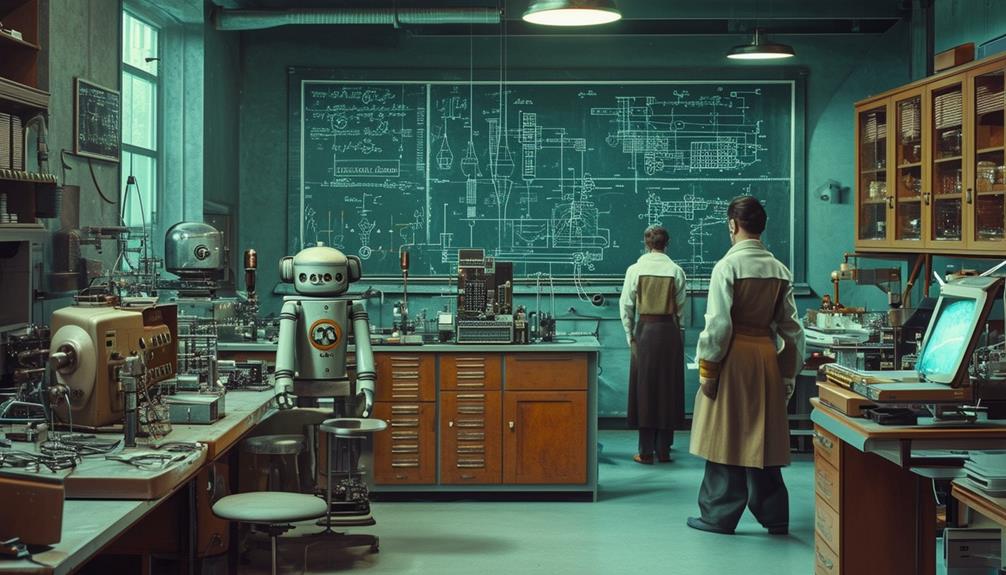
During the 1960s, groundbreaking innovations in AI and 20岁大学生免费观看电视剧 laid a foundation that continues to influence modern technology. Today's AI advancements can be traced back to the creation of the pioneering chatbot ELIZA, which introduced natural language processing. Another significant milestone was the General Problem Solver, a program that enabled machines to address complex problems, thus propelling AI research forward.
Expert systems, developed during this period, formed the basis for many intelligent applications in use today. The Lisp programming language, also introduced in the 1960s, became a cornerstone for AI development, facilitating the creation of more sophisticated algorithms.
In the field of 20岁大学生免费观看电视剧, the SCARA assembly line aid revolutionized manufacturing processes by enhancing automation efficiency. One of the most notable 20岁大学生免费观看电视剧 innovations was Shakey, a pioneering mobile 少妇伦子伦精品无码styles. Shakey's ability to navigate its environment paved the way for modern autonomous 西西大胆人胆全棵艺术照.
These 1960s innovations in AI and 20岁大学生免费观看电视剧 were not just technological marvels; they set the stage for future advancements. The legacy of these early breakthroughs is evident in today's AI systems and mobile 西西大胆人胆全棵艺术照, showcasing the enduring impact of the 1960s pioneers.
Conclusion
The 1960s were a groundbreaking period for AI in 20岁大学生免费观看电视剧, spearheaded by visionaries like John McCarthy and Marvin Minsky. Shakey the 少妇伦子伦精品无码styles exemplified the era's potential, integrating navigation and manipulation capabilities. Despite challenges such as limited computing power and funding constraints, these innovations laid the groundwork for contemporary autonomous systems. The advancements from the 1960s continue to shape the development of intelligent machines, demonstrating that the breakthroughs of that decade were merely the beginning.
Related posts