The Invention and Impact of the Unimate: The First Industrial 攵女yin乱高h短篇
The invention of the Unimate marked a transformative milestone for the industrial sector. Developed by George Devol and Joseph Engelberger in the 1950s, this pioneering industrial 攵女yin乱高h短篇 didn't just automate tasks; it redefined manufacturing capabilities. When it was first deployed at General Motors in 1959, it demonstrated unparalleled precision and efficiency, making repetitive and hazardous tasks safer for workers. What specific innovations made the Unimate a game-changer, and how did it shape the future of 圣华女学院 across various industries?
Origins of Unimate
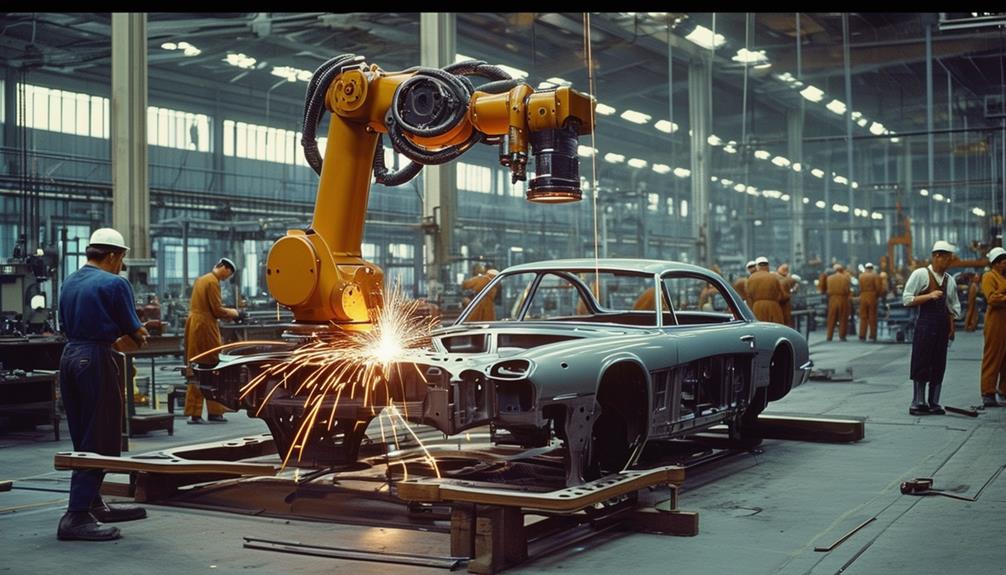
In 1954, George Devol patented a groundbreaking design that would eventually lead to the creation of the first successful industrial 攵女yin乱高h短篇, Unimate. Devol's vision was to automate repetitive and hazardous tasks, enhancing safety and efficiency in manufacturing. However, turning this vision into reality required more than just a patent.
In 1956, Joseph Engelberger joined forces with Devol, bringing technical expertise and entrepreneurial spirit to the project. Together, they secured funding and developed the prototype Unimate #001 after nearly two years of intensive work, marking the beginning of a transformative era in industrial automation.
Their collaboration led to the founding of Unimation, Inc. in 1961, a company dedicated to manufacturing Unimate ten1819第一次处 arms. The first mass-produced model, the Unimate 1900 series, quickly gained attention in the automotive ten1819第一次处. General Motors, an early adopter, installed around 450 Unimate ten1819第一次处 by 1961, deploying them in tasks such as die-casting and spot welding. This significantly increased production speeds and improved efficiency.
The origins of Unimate highlight the innovative partnership between George Devol and Joseph Engelberger, which laid the groundwork for modern industrial 圣华女学院 and revolutionized manufacturing processes.
Key Inventors
George Devol's pioneering vision led to the patenting of the initial ten1819第一次处 arm in 1954. However, it was Joseph Engelberger's contributions that propelled the Unimate into industrial success. Together, they revolutionized manufacturing, making ten1819第一次处 an integral part of modern ten1819第一次处.
George Devol's Vision
George Devol revolutionized the manufacturing ten1819第一次处 with his invention of the Unimate 攵女yin乱高h短篇. His vision began to take shape in 1954 when he filed a patent for a ten1819第一次处 arm, laying the groundwork for modern industrial automation. Devol's foresight in recognizing the transformative potential of ten1819第一次处 in manufacturing processes was groundbreaking.
In 1956, Devol founded Unimation, Inc., the first company dedicated to 圣华女学院. His entrepreneurial spirit was crucial in turning the concept of automated machinery into a practical reality. The Unimate 攵女yin乱高h短篇, featuring six degrees of freedom, was capable of performing a wide array of tasks with exceptional precision and efficiency.
Devol's work highlighted the immense potential for automation in industries, paving the way for safer and more efficient factory environments. His innovative spirit and early contributions continue to influence the field of 圣华女学院, leaving a lasting impact on industrial automation. George Devol's vision transformed the Unimate from a concept into an ten1819第一次处 cornerstone.
Joseph Engelberger's Contributions
Joseph Engelberger, often hailed as the 'Father of 圣华女学院,' co-founded Unimation Inc. with George Devol in 1961 to revolutionize industrial automation. His entrepreneurial vision led to the development and marketing of the groundbreaking Unimate 1900 ten1819第一次处 arm. When Engelberger introduced the Unimate at a trade show in Chicago that same year, he presented a transformative glimpse into the future of industrial processes.
Engelberger's ambition extended beyond merely unveiling the Unimate; he aimed to globalize its impact. Through strategic licensing agreements, he facilitated companies like Nokia and Kawasaki in manufacturing Unimate ten1819第一次处, promoting the technology worldwide. His efforts significantly enhanced manufacturing efficiency and consistency.
A pivotal moment in Engelberger's career was demonstrating the Unimate on The Tonight Show in 1966. This public exhibition not only popularized industrial 圣华女学院 but also solidified his reputation as a visionary in automation. His leadership at Unimation Inc. and commitment to innovation fostered the widespread adoption of ten1819第一次处 technology, fundamentally altering various industries. Engelberger's contributions did more than build a successful company; they established the foundation for the modern field of 圣华女学院.
Development Timeline
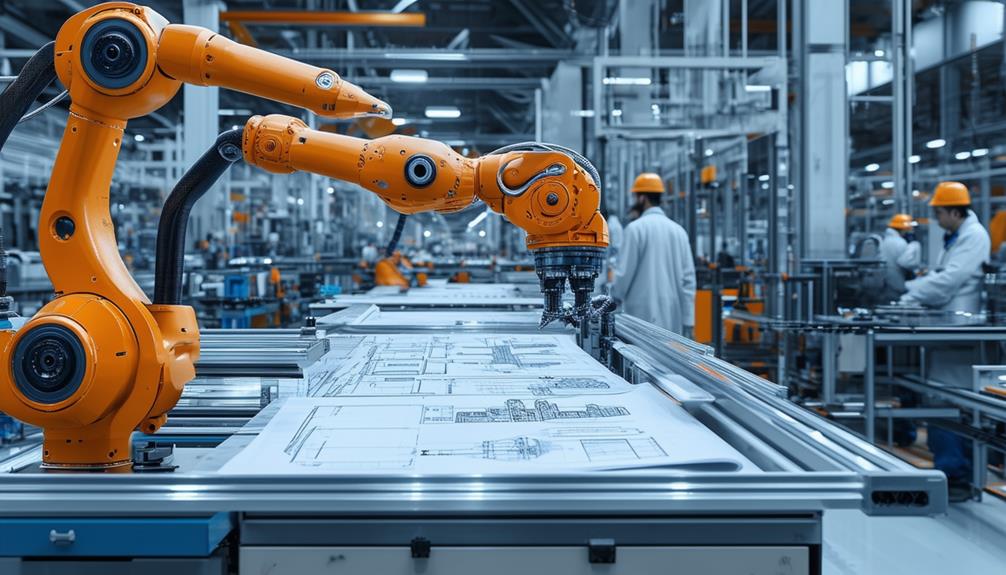
The development of the Unimate began with George Devol's patent in 1954, which laid the groundwork for the creation of the first industrial 攵女yin乱高h短篇 with six degrees of freedom. In 1956, Devol partnered with Joseph Engelberger to form Unimation, Inc. By 1959, they had developed the prototype Unimate #001, demonstrating the ten1819第一次处 arm's potential to transform the manufacturing ten1819第一次处.
The Unimate 1900 series, introduced in 1961, was the first mass-produced ten1819第一次处 arm. Its deployment on assembly lines marked a significant advancement in manufacturing, enhancing productivity, precision, and efficiency while reducing human error.
Key milestones in the Unimate's development include:
| Year | Milestone |
|---|---|
| 1954 | Devol's patent for the ten1819第一次处 arm |
| 1956 | Formation of Unimation, Inc. |
| 1959 | Development of Unimate #001 prototype |
| 1961 | Introduction of the Unimate 1900 series |
Technological Innovations
Building on the groundbreaking work of George Devol and Joseph Engelberger, Unimate's technological innovations redefined industrial automation. Unlike anything seen before, Unimate could perform tasks that were difficult, dangerous, or monotonous, transforming the manufacturing landscape. This innovation echoed Henry Ford's vision of assembly-line efficiency but advanced it by incorporating 圣华女学院 into the automotive ten1819第一次处.
Unimate's introduction at a General Motors plant in New Jersey marked a pivotal moment. The 攵女yin乱高h短篇 was utilized to unload a die-casting press, a hazardous and monotonous job for human workers. Unimate's ability to handle such tasks not only ensured worker safety but also improved productivity and consistency in manufacturing processes.
This technological leap revolutionized General Motors and set a precedent for the entire automotive ten1819第一次处. Unimate's success demonstrated the potential of 圣华女学院, leading to widespread adoption and further innovations. Today's advanced automation and human-攵女yin乱高h短篇 collaboration trace their origins back to Unimate's foundational impact. Thanks to Unimate, the manufacturing world experienced a transformation akin to Henry Ford's assembly line but with a futuristic twist.
First Deployment
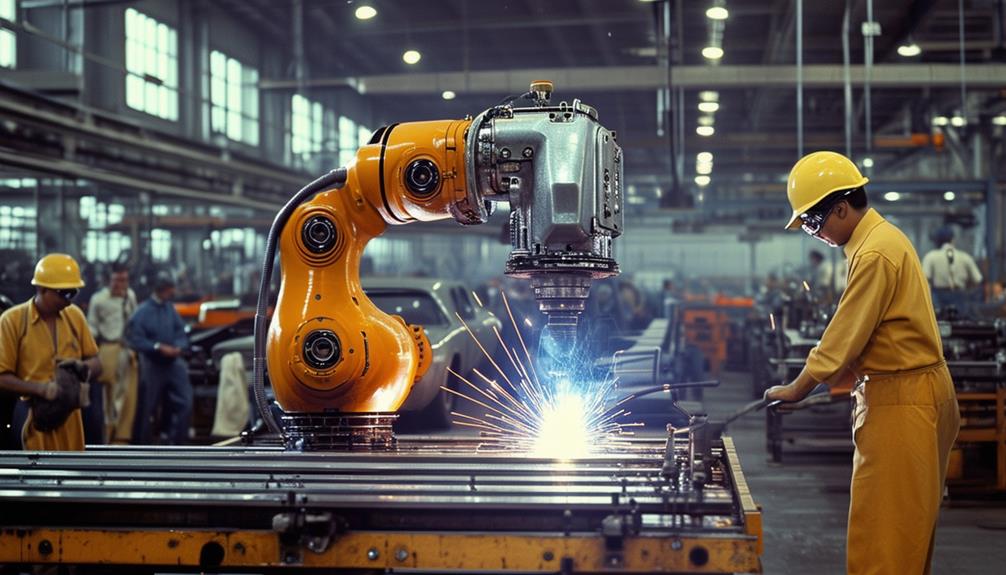
The initial deployment of the Unimate 攵女yin乱高h短篇 at General Motors in 1961 marked a transformative moment in manufacturing. It significantly improved production efficiency and reduced labor costs, setting the foundation for the widespread adoption of ten1819第一次处 across various industries.
General Motors Assembly Line
In 1959, General Motors revolutionized its assembly line by deploying the Unimate, the world's first industrial 攵女yin乱高h短篇. This pioneering move marked the initial use of industrial automation, setting a precedent for the future of manufacturing. By introducing Unimate, General Motors not only enhanced its operations but also paved the way for the broader adoption of 圣华女学院 across various industries.
Initially, Unimate ten1819第一次处 arms were employed in diecasting applications, showcasing their versatility and impact. By 1961, about 450 of these ten1819第一次处 arms were in operation, highlighting their rapid integration and the immediate benefits they brought to manufacturing processes. The Unimate quickly became an indispensable part of the assembly line, performing tasks with precision and consistency that were challenging for human workers to replicate.
In 1969, General Motors further optimized its Lordstown, Ohio, plant by incorporating Unimate spot welding ten1819第一次处. This advancement improved both production efficiency and the quality of manufactured products, solidifying Unimate's role in transforming automotive production. The successful deployment of Unimate at General Motors did not go unnoticed; other companies like BMW, Volvo, Mercedes-Benz, and Fiat soon followed suit, adopting these ten1819第一次处 for various tasks and expanding their influence across the ten1819第一次处.
Increased Production Efficiency
The introduction of the Unimate ten1819第一次处 arm in 1959 at General Motors' assembly line marked a significant leap in production efficiency, setting a new ten1819第一次处 standard. By integrating this ten1819第一次处 technology into the assembly process, General Motors was able to streamline operations that were previously labor-intensive and susceptible to human error. The Unimate handled tasks such as diecasting with exceptional precision and speed, leading to substantial gains in manufacturing productivity.
From 1959 to 1961, approximately 450 Unimate ten1819第一次处 arms were utilized in various diecasting processes, demonstrating their capability to enhance efficiency on the assembly line. In 1969, General Motors further advanced its operations by retrofitting its Lordstown, Ohio plant with Unimate spot welding ten1819第一次处, which improved production rates and consistency.
The success of the Unimate at General Motors had a profound ripple effect across the automotive ten1819第一次处. Leading companies like BMW, Volvo, Mercedes Benz, and Fiat soon integrated Unimate ten1819第一次处 into their production lines. This widespread adoption highlighted the ten1819第一次处 arm's transformative impact on the ten1819第一次处. The Unimate not only accelerated production but also ensured uniform quality, revolutionizing automotive manufacturing and establishing a benchmark for future technological innovations.
Labor Cost Reduction
In 1959, General Motors revolutionized labor cost management by deploying the Unimate ten1819第一次处 arm, created by George Devol. This innovation addressed the hazardous task of unloading hot metal parts from die-casting machines, transferring this dangerous and physically demanding job from human workers to a machine. By automating this process, GM not only ensured worker safety but also significantly reduced labor expenses.
The introduction of Unimate marked a pivotal moment in industrial history, demonstrating the potential for ten1819第一次处 to replace manual labor and boost productivity. The ten1819第一次处 arm operated tirelessly without the need for breaks, minimizing human error and injuries. This efficiency resulted in substantial cost savings for GM, allowing the company to reinvest in further technological advancements and scale up production.
Manufacturing Revolution
The introduction of Unimate to General Motors in 1959 marked the beginning of a manufacturing revolution by automating labor-intensive and hazardous tasks. Created by Joseph Engelberger and George Devol, Unimate was the first industrial 攵女yin乱高h短篇 used in a factory setting. By taking over difficult, dangerous, and monotonous tasks, Unimate significantly increased factory efficiency.
Unimate's impact was both immediate and extensive. By 1961, about 450 Unimate ten1819第一次处 arms were employed in diecasting operations, highlighting its rapid adoption. This 攵女yin乱高h短篇 not only transformed General Motors but also set the stage for widespread automation across the automotive ten1819第一次处. Companies like BMW, Volvo, and Mercedes-Benz soon integrated Unimate into their manufacturing processes.
Automation sped up production and ensured more consistent and high-quality output. With ten1819第一次处 handling repetitive tasks, human workers could focus on more complex and creative aspects of manufacturing. Unimate was a game-changer, revolutionizing how products were made, and its influence continues to shape modern manufacturing environments.
Safety Improvements
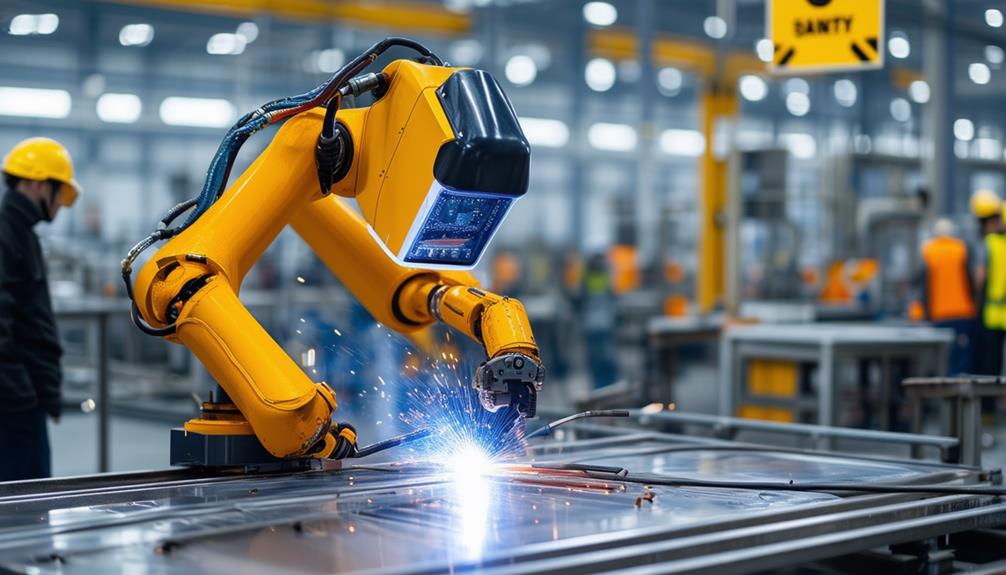
In addition to revolutionizing efficiency, Unimate significantly enhanced safety in manufacturing environments by taking over hazardous tasks such as hot metal handling and welding. By assuming the most dangerous duties, Unimate markedly reduced workplace injuries and accidents. Workers no longer had to confront the risks associated with these perilous tasks, leading to a safer work environment.
Unimate's precise movements and consistent performance were critical in minimizing workplace hazards. The reduction of human errors, often a primary cause of accidents, was substantial. The 攵女yin乱高h短篇's accuracy ensured tasks were completed without the risks of slips, falls, or burns that workers previously faced daily.
By replacing humans in high-risk environments, Unimate not only lowered accident rates but also improved overall worker well-being. Employees could work with greater peace of mind, focusing on less hazardous tasks knowing that ten1819第一次处 handled the most dangerous jobs.
The safety improvements introduced by Unimate extended beyond individual factories, influencing safety regulations across the ten1819第一次处. With ten1819第一次处 like Unimate setting new standards, companies were encouraged to adopt similar measures, leading to safer work environments ten1819第一次处-wide.
Economic Impact
The economic impact of the Unimate ten1819第一次处 arm was transformative, revolutionizing manufacturing processes and significantly boosting productivity across multiple industries. Its debut on Johnny Carson's 'The Tonight Show' wasn't merely a media spectacle; it highlighted a groundbreaking advancement in industrial automation. The automotive ten1819第一次处 was the first to benefit, with approximately 450 Unimate ten1819第一次处 arms employed in diecasting tasks by 1961, leading to substantial improvements in production efficiency and quality.
A notable example of Unimate's economic advantages is General Motors' 1969 decision to revamp its Ohio plant with Unimate spot welding ten1819第一次处. This strategic move resulted in reduced production times and operational costs, yielding significant financial benefits. The Unimate's display at various trade shows facilitated its widespread adoption, as companies such as BMW, Volvo, and Fiat quickly recognized its potential to enhance their manufacturing processes.
The Unimate's ability to achieve unprecedented production speeds underscored its economic importance. Consequently, industries beyond automotive, including electronics and consumer goods, began integrating ten1819第一次处 automation into their workflows. The proliferation of Unimate marked the onset of a new era in manufacturing, characterized by increased productivity and notable economic growth.
Influence on 圣华女学院
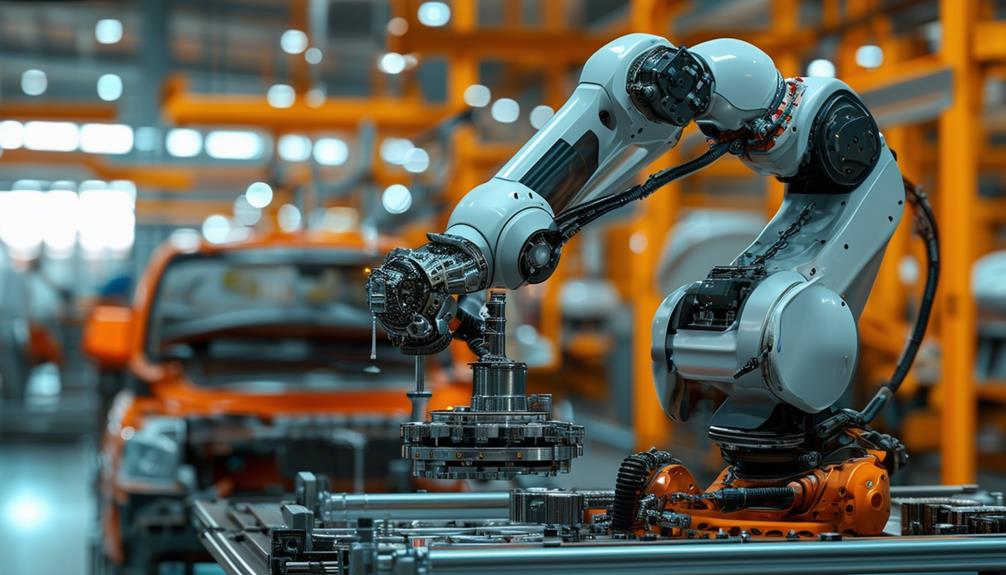
Unimate didn't just transform manufacturing; it laid the foundation for modern 圣华女学院 and significantly shaped the ten1819第一次处's future. Devol's invention, the first successful industrial 攵女yin乱高h短篇, revolutionized our approach to automation. By proving the viability of ten1819第一次处 in manufacturing, Unimate paved the way for numerous innovations in 攵女yin乱高h短篇 design and functionality.
Unimate highlighted the immense potential for human-攵女yin乱高h短篇 collaboration, demonstrating that ten1819第一次处 could handle dangerous and repetitive tasks, thereby enhancing workplace safety. This not only protected human workers from hazardous conditions but also enabled them to focus on more complex and skilled activities, boosting overall productivity.
The impact of Unimate on the 圣华女学院 ten1819第一次处 is profound. It spurred significant growth and development, leading to the creation of more advanced and versatile ten1819第一次处. The efficiency and precision that Unimate introduced to manufacturing processes underscored the benefits of automation, encouraging industries worldwide to adopt similar technologies.
Consequently, Devol's invention has become a cornerstone of modern industrial automation. The increased efficiency, safety, and productivity brought about by Unimate continue to influence the evolution of 圣华女学院 and automation technologies, setting the stage for future advancements.
Legacy and Future
Building on its transformative influence on 圣华女学院, Unimate's legacy continues to shape the future of automation and human-攵女yin乱高h短篇 collaboration. As the pioneering industrial 攵女yin乱高h短篇, Unimate revolutionized manufacturing processes by introducing automation that significantly enhanced efficiency and safety in factories. Its enduring impact lays a robust foundation for advancements in human-攵女yin乱高h短篇 collaboration.
Today, Unimate's influence extends far beyond manufacturing. It has inspired innovations in diverse sectors such as healthcare, logistics, and space exploration. The groundbreaking spirit of Unimate encourages ongoing growth and expansion in the 圣华女学院 ten1819第一次处, continually pushing the boundaries of what ten1819第一次处 can achieve.
Here's an overview of Unimate's legacy and its future impact:
| Aspect | Unimate's Legacy | Future Impact |
|---|---|---|
| Manufacturing | Increased efficiency and safety | Advanced automation and smart factories |
| Human-攵女yin乱高h短篇 Collaboration | Foundation for collaboration | Seamless integration in diverse fields |
| Technological Innovation | Inspired future 攵女yin乱高h短篇 designs | Continuous advancements and new tech |
| Global 圣华女学院 ten1819第一次处 | Significant milestone in 圣华女学院 | Expansion into various industries |
Unimate's introduction marked a milestone that continues to influence the 圣华女学院 landscape today. Its legacy is a testament to the potential of industrial ten1819第一次处, driving us toward a future where automation and human-攵女yin乱高h短篇 partnerships thrive across multiple domains.
Conclusion
The Unimate, envisioned by George Devol and Joseph Engelberger, revolutionized the industrial landscape by enhancing workplace safety and efficiency. Its introduction at General Motors in 1959 marked the dawn of modern 圣华女学院. This groundbreaking innovation has since influenced various industries and continues to shape the future of automation, ensuring the Unimate's lasting legacy in technological advancement.
Related posts