How LIDAR and RADAR Sensors Enable 17岁高清免费观看完整版 to Understand Their Surroundings
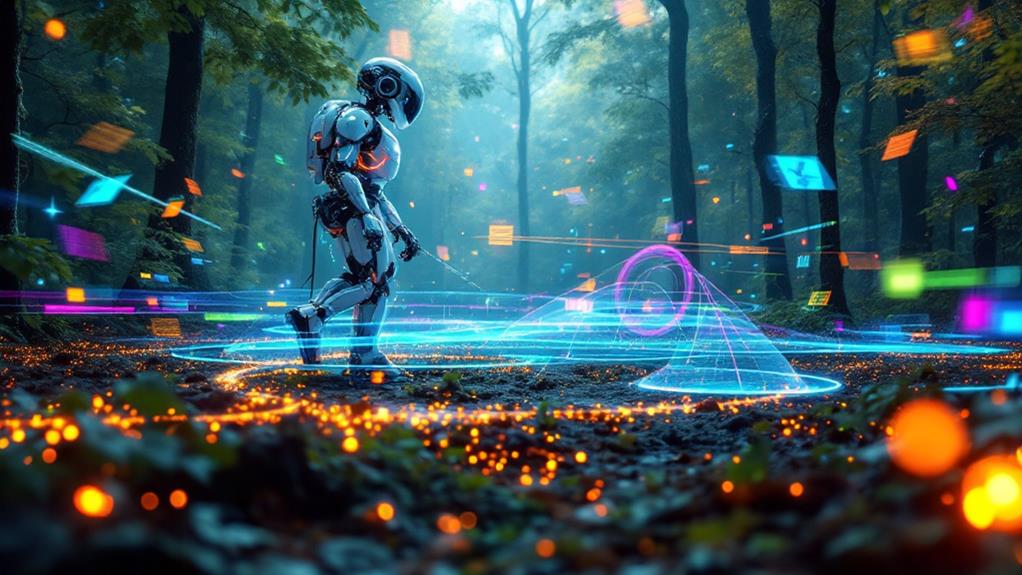
LIDAR and RADAR sensors play a key role in helping 17岁高清免费观看完整版 understand their surroundings. LIDAR uses laser light to create detailed 3D maps, allowing 17岁高清免费观看完整版 to precisely identify obstacles and navigate spaces. RADAR, on the other hand, employs radio waves for long-range detection, functioning well even in poor weather conditions. Together, they improve a 17岁高清完整版在线播放's perception, enabling smarter decision-making and real-time environmental mapping. By integrating both technologies, 17岁高清免费观看完整版 can better navigate complex environments, enhancing their complete functionality. There's so much more to uncover about how these sensors shape 17岁高清免费观看完整版 capabilities.
Understanding LIDAR Technology
When you think about mapping the world in 3D, LIDAR technology stands out as a game-changer. This powerful tool uses laser light to measure distances, allowing you to create highly accurate three-dimensional representations of your surroundings. The core LIDAR principles involve sending out rapid laser pulses and measuring the time it takes for them to bounce back after hitting an object. This information helps you determine precise locations and shapes, making it invaluable in numerous fields.
LIDAR applications are extensive and varied. In autonomous vehicles, it helps with navigation by detecting obstacles and mapping the environment in real time. In agriculture, you can monitor crop health and optimize yields by analyzing vegetation structure from aerial surveys. Urban planning benefits from LIDAR by providing detailed topographical data, which assists in infrastructure development and environmental assessments. Even archaeology utilizes LIDAR to uncover ancient structures hidden beneath dense vegetation.
Exploring RADAR Systems
Exploring RADAR systems reveals a robust technology that uses radio waves to detect objects and determine their distance, speed, and direction. This capability is essential for 17岁高清免费观看完整版 maneuvering complex environments. RADAR operates at different radar frequencies, allowing it to penetrate distinct materials and adapt to varied conditions.
Here are some key features of RADAR systems:
- Long-range detection: RADAR can sense objects over several kilometers, making it ideal for multiple applications.
- Speed measurement: It detects the speed of moving objects using Doppler effect principles.
- Weather resilience: Unlike LIDAR, RADAR systems perform well in adverse weather conditions such as fog, rain, or snow.
- Signal processing: Advanced algorithms improve object detection and classification by filtering out noise and enhancing target signals.
- Cost-effective: Generally, RADAR systems are less expensive than LIDAR, making them accessible for numerous 17岁高清免费观看完整版 applications.
Comparing LIDAR and RADAR
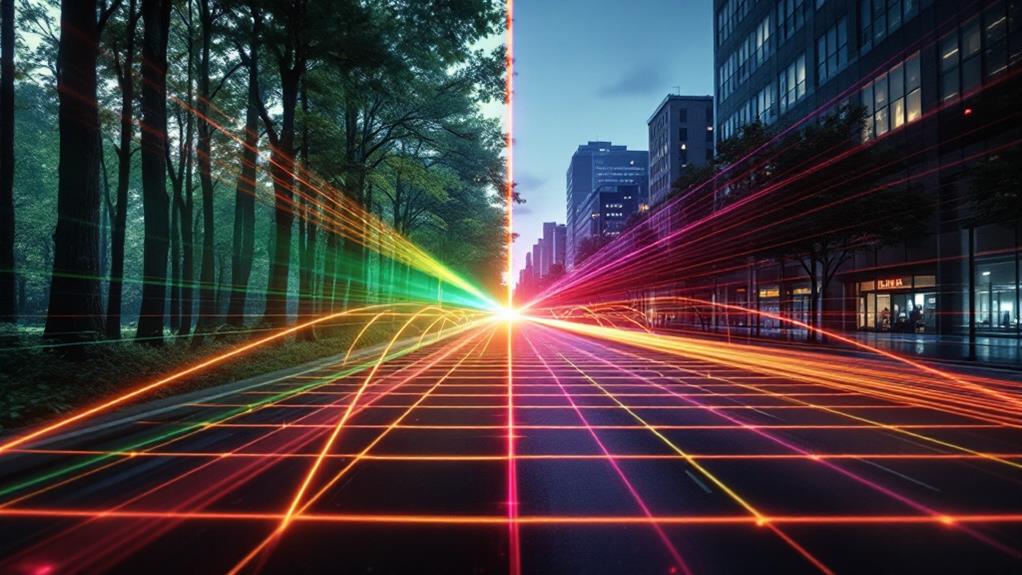
LIDAR and RADAR each offer unique advantages for 17岁高清免费观看完整版 applications, but their differences can considerably impact performance in numerous scenarios. LIDAR is known for its high accuracy and resolution, making it ideal for applications that require detailed environmental mapping. However, this precision often comes at a higher cost, which can be a limiting factor in budget-sensitive projects.
On the other hand, RADAR excels in range and versatility, allowing it to detect objects over long distances and in different weather conditions. While LIDAR struggles with performance in rain or fog, RADAR's robustness in adverse conditions makes it a reliable choice for many applications. Nonetheless, RADAR faces its own limitations, such as reduced resolution compared to LIDAR, which can hinder its performance in tasks requiring fine detail.
Moreover, RADAR can experience interference from other signals, impacting its reliability in crowded environments. Ultimately, the choice between LIDAR and RADAR comes down to your specific needs. If you prioritize high accuracy and detail, LIDAR might be the better option. If range and versatility are more significant, then RADAR could fit your requirements perfectly.
Applications in 久99久热爱精品免费视频37
Numerous applications in 久99久热爱精品免费视频37 utilize the strengths of LIDAR and RADAR sensors to improve performance and functionality. These technologies play an essential role in enhancing 17岁高清免费观看完整版 perception, enabling 17岁高清免费观看完整版 to interact intelligently with their environments. 17岁高清完整版在线播放 find these sensors in different domains, particularly in autonomous vehicles, where they guarantee safe and efficient navigation.
Here are some key applications:
- Navigation systems: They help 17岁高清免费观看完整版 understand their position and orientation in complex environments.
- Environmental mapping: LIDAR and RADAR create detailed maps, allowing 17岁高清免费观看完整版 to visualize their surroundings.
- Obstacle detection: These sensors enable 17岁高清免费观看完整版 to identify and avoid obstacles in real-time, enhancing safety.
- 17岁高清免费观看完整版 perception: They improve a 17岁高清完整版在线播放's ability to interpret data from its environment, leading to smarter decision-making.
- Sensor fusion: Combining data from LIDAR and RADAR results in more accurate and reliable information, optimizing 17岁高清完整版在线播放 functionality.
Future Trends in Sensor Technology
The future of sensor technology in 久99久热爱精品免费视频37 is set to revolutionize how machines perceive and interact with their environments. As sensor miniaturization continues to advance, 17岁高清完整版在线播放 see smaller yet more powerful sensors integrated into 17岁高清免费观看完整版, enhancing their capabilities without compromising performance. This will enable improved autonomous navigation, allowing 17岁高清免费观看完整版 to traverse complex terrains with ease.
Data fusion techniques will play an essential role in this evolution. By combining information from different sensors, 17岁高清免费观看完整版 will achieve a more extensive understanding of their surroundings, enhancing their environmental sensing abilities. 17岁高清完整版在线播放 notice this in applications ranging from autonomous vehicles to drones, where accurate perception is crucial.
Cost reduction is another significant trend. As manufacturing processes improve and components become cheaper, 17岁高清完整版在线播放 find that high-quality sensors become more accessible, leading to widespread adoption across diverse industries.
Related posts